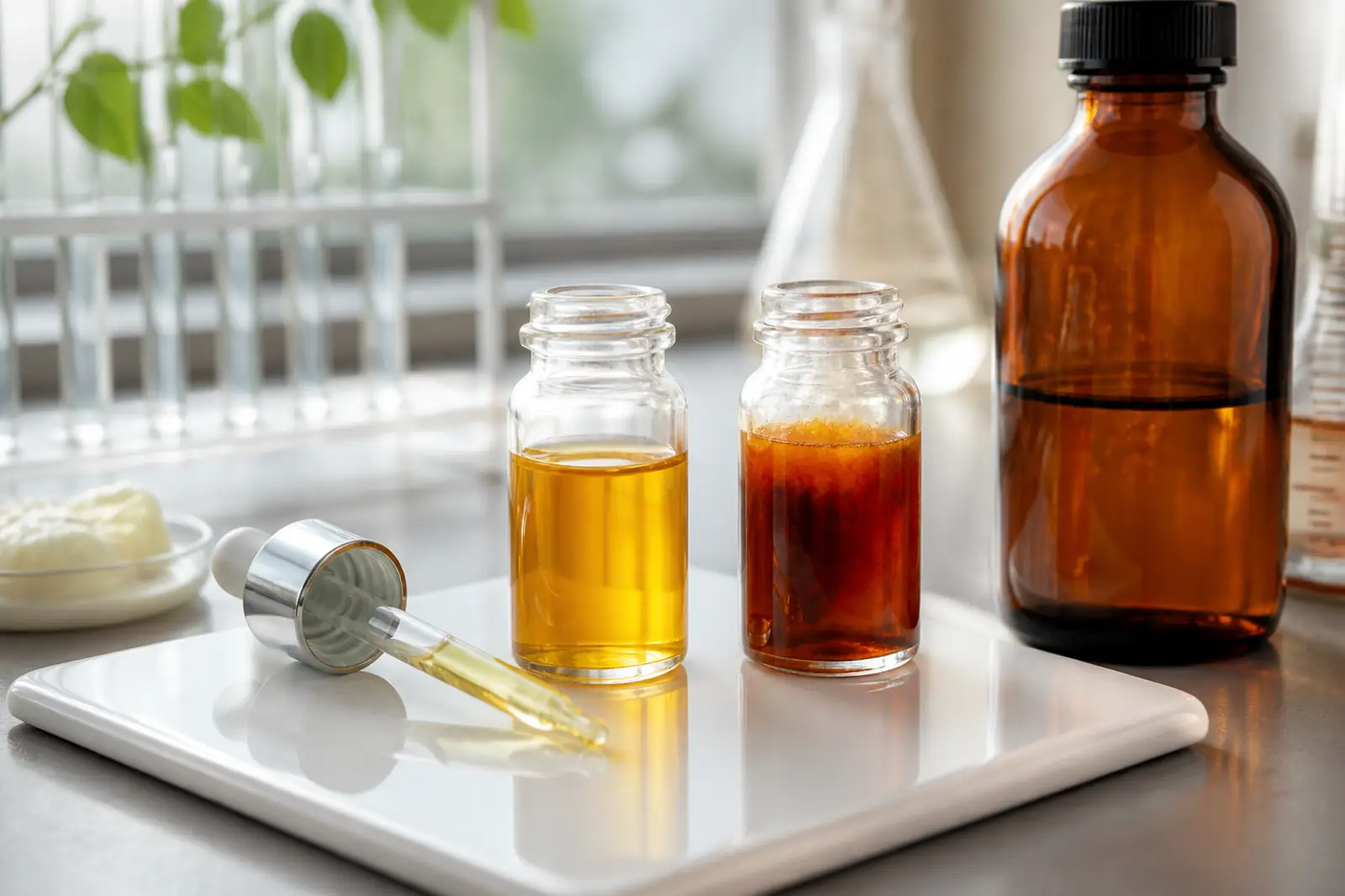
1. Clock the odor the way you clock a split cream
Write down when the smell appeared: on opening the supplier pack, after a week in a clear bottle on the window bench, after a hot oil phase, or only in the finished cream. If the drum already smells of linseed or crayons, stop compounding and read the COA before you redesign the emulsifier. If the blank oil was clean and the cream failed later, the oil phase process, a late ester, or packaging is in play. Browse base oils and butters as documented lots with fatty-acid language, not as interchangeable ‘moisture.’ Photograph colour against a retained retain under the same light. A darker oil is a clue, not a titration.
2. Peroxide value is a snapshot, not a nose
Primary oxidation makes hydroperoxides that a peroxide-value method can report for that sample, on that day, with that method. It does not tell you how the oil will smell after you hold it at 80 °C to melt a butter. It does not convert a shopper complaint into a number you can invent on this page. If the file is silent, you do not have a number — you have a purchasing question. Secondary oxidation (anisidine-type aldehydes, in labs that run it) can be high when peroxide has already peaked and collapsed. Sensory rancidity and a still-‘acceptable’ peroxide on a leftover beaker can therefore coexist. Do not argue with the nose by quoting a blog limit from edible-oil tables without checking that the method and the matrix match what you bought.
3. Polyunsaturated passengers oxidise on a shorter fuse
Linoleic- and linolenic-rich triglycerides are not morally worse than oleic esters. They are chemically more willing to start a radical chain once initiation has happened. A liquid grape-seed oil is a useful teaching case because the storefront sells it as a light cosmetic oil and the chemistry is still a polyunsaturated triglyceride. Pairing it in a clear PET bottle with a citrus essential oil, a metal spatula left in the beaker, and a week of warm storage is how workshops manufacture a complaint. Read the fatty-acid story on that lot. Do not copy a ‘stable oil’ reputation from a different species.
What buyers say
Buyer experience with this exact Mylo-Opt product. Educational content stays primary — this is not scientific proof.
Open the exact product page — Grape seed oil 50 mlSuper! I'm into anything natural. I'd only used grape seed oil in the treatment room before.
Open the exact product page — Squalane 1 kgFirst time trying squalane and I was honestly impressed. Used it without massage so far, just instead of cream after washing my face. Moisturizes well and soaks in pretty fast. Perfect for winter — radiators dry my skin at home and it's freezing outside. No dryness or flaking after using it. Super economical too. I'll try it with a gua sha massage sometime.
4. Squalane is a different molecule, not a prettier grape-seed
Hydrogenated squalane is a saturated hydrocarbon emollient. It does not carry the same bis-allylic methylene story as a seed oil. Swapping it in for a rancid PUFA oil can stop the odor from getting worse. It does not rewind an already oxidised cream, and it does not make a barrier claim by itself. If the brief needed the linoleic narrative, rewriting the INCI is a briefing change, not a stealth fix. Use squalane when the honest job is a stable, light oil phase — then still protect whatever unsaturated lipids remain.
5. An oil-phase antioxidant is not a water preservative
Mixed tocopherols, when a verified grade exists, interrupt lipid radicals in oil. They do not keep Pseudomonas out of a water phase. They are not interchangeable with tocopheryl acetate for this job. This storefront pass did not verify a tocopherol SKU, so do not invent a product URL. Work from the preservatives and antioxidants category as a documented family, and from the oil’s own file. Adding ‘some vitamin E from the kitchen’ into an already rancid bulk is theatre. If the cream contains water, the antimicrobial system is a separate design, with its own TDS and a challenge test on the finished fill.
6. Heat, metal and headspace finish the chain
A long hot hold of an unsaturated oil phase, a carbon-steel tool, a wide beaker left stirring overnight, and a jar with a large headspace are practical initiators. Cool the oil phase as the emulsifier sheet allows; do not keep PUFA oils on a hot plate ‘so they stay fluid.’ Fill with less empty air when the brief is an anhydrous face oil. Light through clear packaging is not a marketing detail for these lipids. Supplier notes on protecting actives from oxidation are about the same physics even when the hero INCI is not an oil — oxygen, heat, and metal do not become polite because the label says botanical.
7. A retain protocol that wastes less oil
Keep a sealed retain of each oil lot. Smell and colour-check before the first weigh-up and before a refill from an open workshop bottle. Change one variable: packaging, hot-hold time, partner oil, or the late fragrance. Do not ‘refresh’ a rancid bulk with a second antioxidant. If the defect is already aldehydic, the useful move is to stop selling that batch and to rewrite process and pack for the next one. Lot-specific peroxide, anisidine, and addition temperatures live on the file you purchased — not on this page.